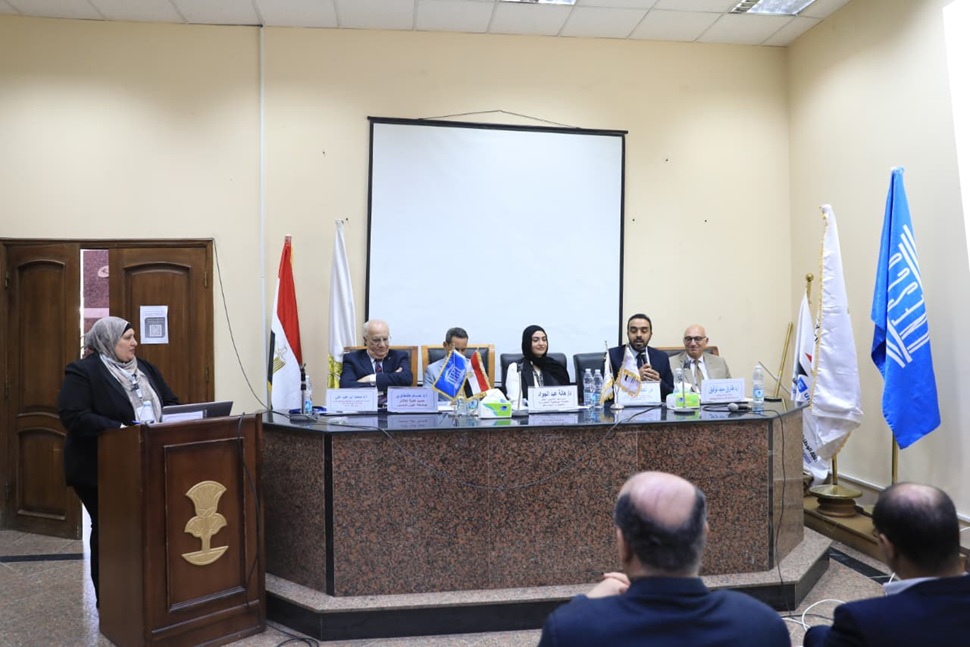
Under the patronage of Dr. Abdelaziz Konsowa, Minister of Higher Education and Scientific Research and Chairman of the Egyptian National Commission for Education, Science and Culture (UNESCO–ALECSO–ICESCO), the Egyptian National Commission, in cooperation with the United Nations Educational, Scientific and Cultural Organization (UNESCO), and with the participation of the Faculty of Archaeology at Ain Shams University, the Faculty of Archaeology at Cairo University, and the Ministry of Tourism and Antiquities, organized a national training course titled: “UNESCO’s Role in Building the Capacity of Museum Professionals in Creating Virtual Tours.” The course was held from May 3 to 6 at the Faculty of Archaeology, Ain Shams University.
This comes within the framework of the Ministry’s strategy to promote integration between culture and digital transformation and to support capacity building for professionals working in museum and cultural institutions.
The training course covers a range of specialized modules, including digital media and virtual tours, photography, AI-based audio and video generation, panoramic imaging, applied project models such as photo stitching, as well as photogrammetry techniques, 3D imaging, and methods for integrating digital media into virtual tours.
During the opening session, Dr. Hala Abdelgawad, Assistant Secretary-General of the Egyptian National Commission, conveyed the greetings of Dr. Ayman Farid, Head of the Cultural Affairs and Missions Sector and Supervisor of the Commission, and delivered his opening remarks on his behalf. He emphasized that the training course represents an important step in supporting the state’s efforts to develop cultural institutions and enhance their digital capabilities. He also noted that cooperation with UNESCO reflects the Commission’s commitment to transferring international expertise and providing specialized training programs that qualify museum professionals in line with the latest global standards.
Dr. Ayman Farid highlighted that digital transformation has become essential for preserving cultural heritage and making it accessible to future generations through innovative interactive tools. He added that virtual tours contribute to expanding access to museums and heritage sites and enhancing cultural awareness. He reaffirmed the Commission’s continued support for training initiatives and partnerships with national and international academic and cultural institutions to advance sustainable development goals and strengthen Egypt’s cultural standing regionally and internationally.
Dr. Hossam Tantawy, Dean of the Faculty of Archaeology at Ain Shams University, affirmed that digital transformation is now a necessity for developing museum and cultural institution operations. He highlighted the importance of virtual tours in improving access to cultural heritage and enhancing presentation and audience engagement methods. He added that the Faculty is committed to preparing qualified professionals capable of keeping pace with global developments in museum management and digital heritage through strengthened cooperation with national and international institutions.
Dr. Tarek Tawfik, Professor of Archaeology at the Faculty of Archaeology, Cairo University, and Vice President of ICOM Egypt, conveyed the greetings of Dr. Mohsen Saleh, Dean of the Faculty of Archaeology, Cairo University, who was unable to attend due to prior commitments. He emphasized the importance of leveraging modern technologies in developing museums and exhibition methods to enhance visitor experience and maximize the utilization of the country’s cultural and heritage assets.
Dr. Ahmed Rahima, Advisor to the Minister for Human Resource Development and Supervisor of the Central Training Unit, conveyed the greetings of Dr. Hisham El-Leithy, Secretary-General of the Supreme Council of Antiquities, who was unable to attend due to unexpected travel. He stressed the importance of investing in the development of museum and antiquities professionals and supporting training programs aligned with global developments in digital transformation and heritage preservation.
Dr. Mohamed Ibrahim Ali, Head of the Department of Museum and Archaeological Sites Management at the Faculty of Archaeology, Ain Shams University, and former Minister of Antiquities, stated that the training course represents an important step in advancing the museum sector and preserving cultural heritage through the use of modern digital technologies and virtual tours. He noted the Faculty’s commitment to strengthening cooperation with national and international institutions to build the capacities of professionals and researchers in the museum field, enhance exhibition methods and digital documentation, and support national efforts to preserve cultural identity.
The training course is attended by a distinguished group of experts and specialists in museums, digital technologies, and heritage management, including faculty members, researchers, and experts in panoramic photography, 3D scanning, and museum and archaeological site management. Approximately 35 trainees specializing in museum-related fields are participating.
On the sidelines of the opening, a field visit was organized to the Zaafaran Palace Museum at Ain Shams University, where participants explored the museum’s collections, including its archaeological and historical artifacts, and were introduced to exhibition techniques. This visit provided participants with a practical model relevant to the course’s subject matter.