Activating university and institute students’ participation in implementing the “Save It… Light It” initiative for energy conservation
-
Dr. Konsowa: Students are a driving force behind the success of energy conservation efforts
-
Supporting students’ role in leading awareness within the university community
-
Developing performance measurement tools and تعزيز behavioral sustainability of the initiative
-
Efforts to align academic specializations with labor market needs are progressing in a structured manner
-
Student activities receive special attention within the higher education system
-
Supporting innovation and applied projects is a top priority for the Ministry
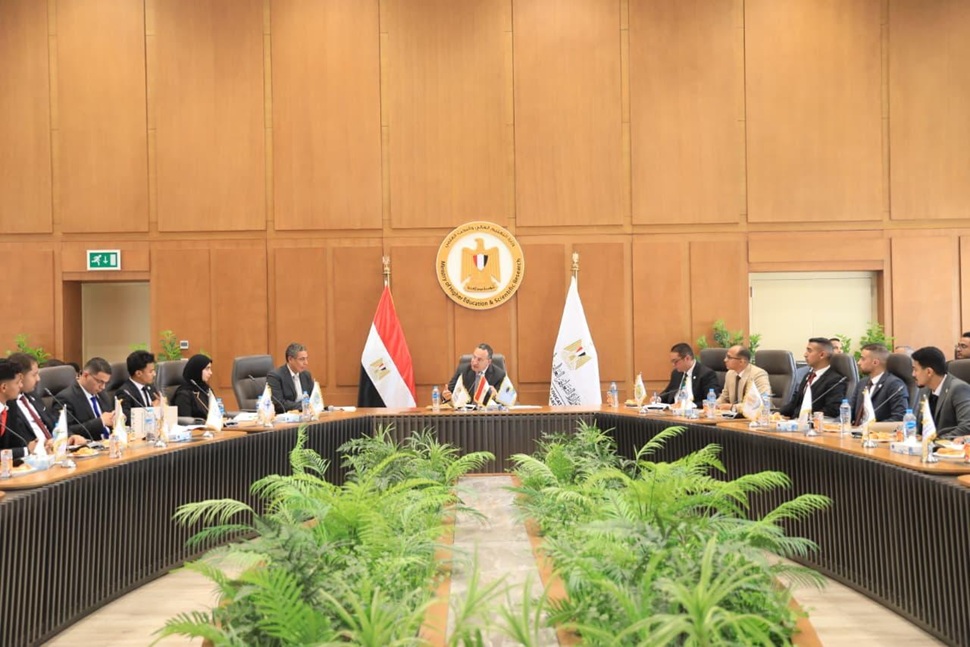
As part of the Ministry of Higher Education and Scientific Research’s commitment to strengthening engagement with students and leveraging their potential to support national initiatives—foremost among them energy conservation efforts—and in implementation of the “Save It… Light It” initiative aimed at raising awareness among Egyptian university and institute students about the importance of rationalizing energy consumption, Dr. Abdelaziz Konsowa, Minister of Higher Education and Scientific Research, held a meeting with representatives of student unions from public, private, national, and technological universities, along with representatives of central student families and student affairs departments. The meeting aimed to follow up on the implementation rates of the initiative and assess its impact within the university community.
Dr. Abdelaziz Konsowa emphasized that university and institute students represent a powerful force capable of driving societal change, noting that their number is estimated at around 4 million students, which enhances the potential for achieving a broad and sustainable impact through awareness initiatives.
The Minister explained that the success of the “Save It… Light It” initiative depends on its ability to move beyond awareness campaigns into measurable practical behaviors. He stressed the importance of embedding a culture of energy conservation as part of students’ daily habits, contributing to the state’s efforts to address challenges related to the energy sector.
He also noted that the Ministry is working to develop academic programs through a specialized committee tasked with updating educational content and linking it to labor market requirements, with a focus on supporting innovation and applied projects—particularly in the fields of energy and sustainability—in cooperation with the Fund for Innovators and Geniuses.
The Minister further stressed the importance of developing student activities as platforms for practical application, contributing to building students’ skills and enhancing their readiness to compete at various levels.
For his part, Dr. Karim Hammam, Advisor to the Minister for Student Activities and Director of the Leadership Preparation Institute, affirmed the Ministry’s commitment to empowering students to transform awareness into real practices through interactive activities and innovative initiatives “from university youth to university youth.” He highlighted the importance of spreading a culture of energy conservation not only within university campuses but also in homes and across all sectors, in addition to encouraging investment in renewable energy sources.
He added that the current phase requires maximizing the utilization of students’ potential, as they are the most influential force in shaping societal behavior within universities. This can be achieved through launching innovative initiatives based on creativity and active participation, ensuring that awareness messages are translated into tangible daily practices. He emphasized that equipping students with innovative thinking and teamwork skills is fundamental to ensuring the sustainability and long-term impact of the initiative.
In the same context, Dr. Adel Abdel Ghaffar, Media Advisor and Official Spokesperson for the Ministry, explained that the initiative is based on positive participation and collective action in light of global challenges in the energy sector, emphasizing that youth are the main driver of its success.
He pointed out that the student population represents a real opportunity to create broad societal impact by transferring awareness messages to families and the wider community, thereby promoting a culture of energy conservation.
The spokesperson also delivered an awareness presentation on the campaign’s objectives and implementation mechanisms within universities, focusing on spreading “positive contagion” in daily behaviors, enhancing the use of digital media and creative content production, and highlighting success stories as motivating examples. He also stressed the importance of expanding the use of renewable energy sources within universities and linking awareness to practical applications, emphasizing that energy conservation is a shared societal responsibility.
At the conclusion of the meeting, students from universities and institutes presented a number of proposals and innovative ideas, along with key activities already implemented, including organizing awareness seminars, launching student competitions, and producing and publishing digital content عبر social media platforms—contributing to reinforcing the culture of energy conservation and expanding its societal impact.
Representatives of student unions affirmed their full commitment to supporting and implementing the “Save It… Light It” initiative by expanding student participation and adopting innovative, practical ideas and initiatives that contribute to achieving its objectives.
They also emphasized their dedication to conveying awareness messages to all segments of society—especially within families—to reinforce energy-saving behaviors, affirming that university youth will continue to lead efforts in supporting national causes and actively contributing to sustainable development.