Unprecedented participation from more than 1,000 organizations and institutions, and over 150 companies and startups, at Egypt’s first business-focused event dedicated to the Horizon Europe Programme.
Dr. Abdelaziz Konsowa:
▪ We are working to transform knowledge and innovation into practical solutions that serve the national economy and support sustainable development.
▪ Partnerships between universities and industry constitute a key pillar in building a knowledge-based economy.
▪ Horizon Europe offers promising opportunities for Egyptian researchers and innovators to engage in international cooperation.
Eng. Khaled Hashem:
▪ Egypt–EU relations have evolved into a comprehensive strategic partnership spanning industry, investment, energy, education, innovation, and human capital development.
▪ Horizon Europe represents an important opportunity to strengthen research capabilities, facilitate technology transfer, and support innovation development.
Reflecting the depth of the strategic partnership between the Arab Republic of Egypt and the European Union in the fields of scientific research and innovation, the Ministry of Higher Education and Scientific Research, through the European Research and Innovation Cooperation Office, in cooperation with the Delegation of the European Union to Egypt, organized the first specialized event dedicated to supporting the participation of the Egyptian private sector in the Horizon Europe Programme under the title:
“Egypt–EU Innovation Partnership: Boosting Business Growth and Competitiveness through Horizon Europe.”
The event aimed to transform the growing interest in Horizon Europe into practical partnerships and joint research and innovation projects, while enhancing the ability of Egyptian companies to integrate into European and international value chains, thereby supporting the national economy and strengthening the competitiveness of Egyptian industry.
Dr. Abdelaziz Konsowa, Minister of Higher Education and Scientific Research, emphasized that launching the initiative to support private sector participation in Horizon Europe marks a new qualitative step in Egypt–EU cooperation and reflects the shared commitment to enhancing the role of scientific research and innovation in achieving sustainable development.
He noted that the initiative will provide greater opportunities for Egyptian institutions and companies to understand the programme’s participation mechanisms and benefit from its resources, helping transform ideas and innovations into practical applications that serve both the economy and society.
The Minister added that Egypt is developing its higher education and scientific research system through an integrated vision aimed at building a knowledge-based economy by supporting researchers, encouraging innovation, and strengthening cooperation among universities, research centers, and industry. He stressed that increasing private sector participation in research projects is essential for linking research outputs with labor market needs and advancing industrial and technological development.
He further explained that Egypt’s active participation in Horizon Europe opens broad prospects for Egyptian researchers and innovators to collaborate internationally and benefit from global expertise in science and technology. He reaffirmed the Ministry’s commitment to supporting international partnerships and maximizing the benefits of global research programmes to enhance the quality of Egyptian scientific research and strengthen Egypt’s position as a regional hub for knowledge and innovation.
For his part, Eng. Khaled Hashem, Minister of Industry, highlighted the remarkable development of Egypt–EU relations over recent years, evolving into a comprehensive strategic partnership encompassing industry, investment, energy, education, innovation, and human capital development. He noted that the European Union remains one of Egypt’s most important economic and development partners.
The Minister underscored that research and innovation have become key drivers of productivity growth, industrial advancement, technology transfer, and sustainable competitiveness amid rapid global transformations driven by technology, digitalization, and sustainability.
He added that Horizon Europe provides a valuable opportunity to strengthen research capacities, facilitate technology transfer, support innovation development, and foster collaboration among universities, research institutions, startups, and industry, thereby contributing to Egypt’s industrial strategy and enhancing the competitiveness of the national economy.
Maria Cristina Russo, Deputy Director-General for Research and Innovation at the European Commission, stated that Egypt’s participation in Horizon Europe since 2025 represents a significant milestone, bringing Egypt closer to the European research and innovation ecosystem and opening wider opportunities across multiple sectors.
She explained that the programme focuses on linking research excellence with industrial development, capacity building, and the transformation of innovations into products, services, companies, and jobs. She emphasized the importance of increasing the participation of Egyptian companies, startups, and the private sector to benefit from the programme’s opportunities and strengthen Egypt–EU cooperation in innovation and competitiveness.
Russo also noted that Egypt possesses a vibrant research ecosystem and a strategic geographical position connecting Africa and the Middle East, affirming that Egypt–EU cooperation in research and innovation offers significant opportunities to promote sustainable development, skills development, and entrepreneurship.
Dr. Yasser Refaat, Advisor to the Minister of Higher Education and Scientific Research for Planning, Governance, and Research Policy, explained that the development of Egypt’s research system aims to maximize the practical value of knowledge—from scientific discovery and applied research, through proof of concept and prototype development, to transforming research outputs into industrial applications, startups, and marketable products.
He stressed that achieving this objective requires building integrated bridges between universities, research centers, and industry, while aligning research with development challenges and real industrial needs. He also highlighted the importance of the National Challenge Bank Initiative in identifying priorities and converting them into applied research projects and implementable innovation opportunities that support the transition toward a knowledge-based economy and strengthen international cooperation through programmes such as Horizon Europe.
Dr. Salma Yousry, Assistant Minister for International Cooperation, noted that joining the programme opens new and expanded opportunities for Egyptian institutions and the private sector. She emphasized the effective role played by the European Research and Innovation Cooperation Office in raising awareness, building capacities, and promoting effective national utilization of the programme.
She added that the main Work Programme for 2026–2027, with a budget of €14 billion, offers extensive opportunities in health, digital technologies, industry, space, energy, climate, mobility, food systems, bioeconomy, agriculture, and the environment.
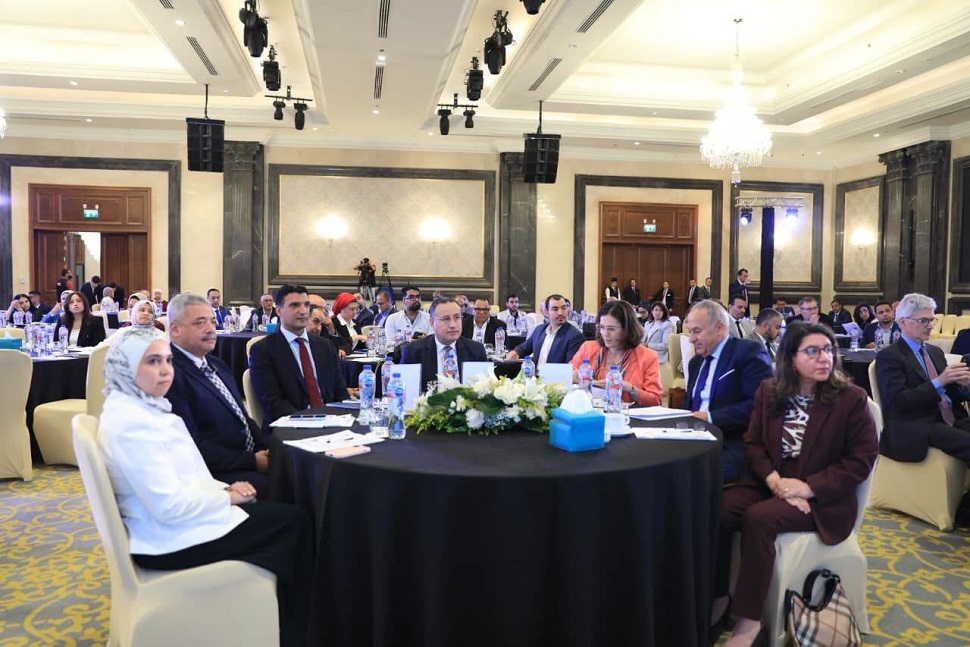
The event also featured specialized sessions on Egypt–EU cooperation in research and innovation, available funding opportunities, mechanisms for building international partnerships, and successful private sector experiences.
These efforts align with Egypt’s vision to strengthen a knowledge-based economy, support innovation and entrepreneurship, maximize the benefits of scientific research outcomes, and accelerate technology transfer, thereby contributing to the establishment of an integrated national innovation ecosystem capable of competing regionally and internationally.
It is worth noting that Horizon Europe is the European Union’s flagship research and innovation programme for the period 2021–2027, and Egypt is the second African country to join the programme as an associated partner country.
The event was attended by Dr. Yasser Refaat, Advisor to the Minister for Planning, Governance, and Research Policy; Dr. Salma Yousry, Assistant Minister for International Relations; Maria Cristina Russo, Deputy Director-General of DG RTD at the European Commission; and Dr. Heba Gaber, Representative of the European Union Delegation to Egypt. The event also attracted broad participation from more than 150 companies and startups, investors, business associations, incubators, accelerators, governmental institutions, technology transfer organizations, and innovation support entities, while the number of registered organizations exceeded 1,000.