Minister of Higher Education Affirms:
-
The achievements of Senghor University reflect the political leadership’s commitment to strengthening Egypt’s role in Africa
-
The university’s new campus is a strategic addition to Egypt’s higher education system and its soft power in Africa
-
The new campus provides a modern educational environment that supports innovation and African capacity-building
-
Senghor University is a pioneering model of Francophone partnership and continuous support for development in Africa
-
The university is one of the most important pillars of Egyptian-African cooperation and a successful model for international educational integration
Alexandria Governor Affirms:
-
Senghor University’s campus in Borg El Arab enhances Alexandria’s position as a promising educational hub
-
The new campus is a step forward in supporting development and capacity-building in Africa
Chairman of Senghor University Board Affirms:
-
Supporting Senghor University reflects Egypt’s commitment to Africa
-
The university has graduated more than 4,000 African professionals and continues its role in capacity-building and development
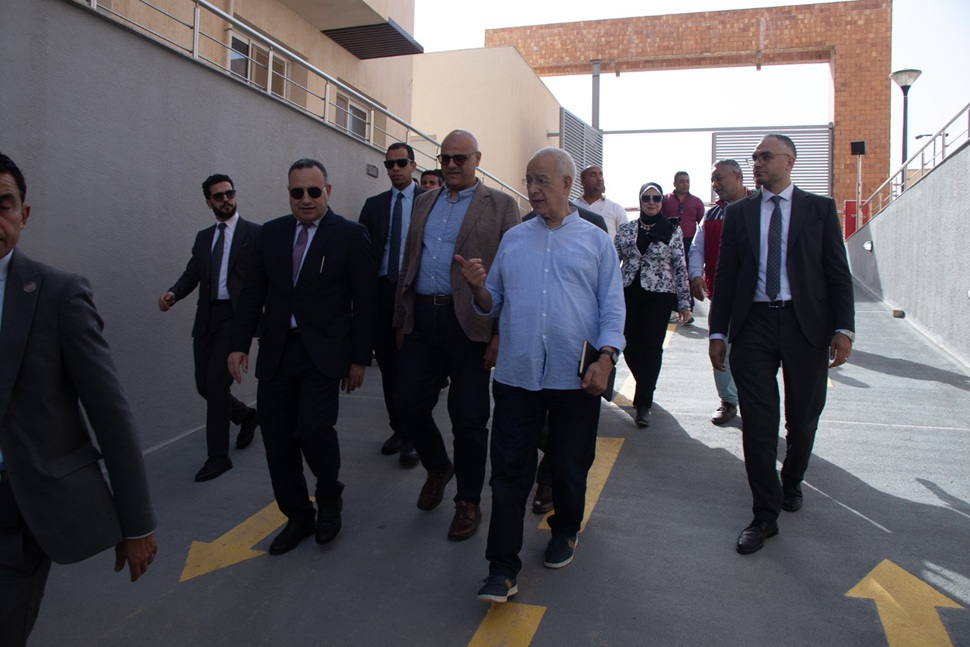
Dr. Abdelaziz Konsowa, Minister of Higher Education and Scientific Research, toured the new campus of Senghor University in Borg El Arab City, Alexandria Governorate, accompanied by Eng. Ayman Attia, Governor of Alexandria; Dr. Hany Helal, Chairman of the University’s Board of Directors; Dr. Thierry Verdier, Executive Director of the University; Dr. Hany Madkour, Assistant Minister for National Projects; and a number of university officials.
During the visit, the Minister received a detailed presentation on the university’s new main campus, which was granted to Senghor University by the Egyptian government. The campus spans 10 feddans and includes two academic buildings, an administrative building, a conference hall building, a dining hall, four student residential buildings, staff housing, guest accommodations, a gymnasium, a swimming pool, a multi-purpose sports field, and squash courts, reflecting Egypt’s support for the university’s mission in preparing African professionals.
The new campus represents an integrated model of Egyptian-Francophone partnership, designed according to the highest academic standards to serve as a center for education and scientific research. It includes modern classrooms, an advanced library, accommodation facilities, and sports and cultural spaces, enabling the university to expand its capacity, double student enrollment, and provide an environment that fosters excellence and innovation in support of sustainable development goals across Africa.
Currently, 143 students from the 20th cohort (2025–2027) are enrolled at the new campus, distributed across four departments: Culture (42 students), Environment (29 students), Management (35 students), and Health (37 students).
The university offers four main academic departments—Culture, Environment, Management, and Health—with eight specialized programs aligned with the Sustainable Development Goals, including Cultural Heritage Management, Cultural Institutions Management, Natural Reserves and Biodiversity Management, Environmental Management, Governance and Public Facilities Management, Project Management, International Nutrition, and Public Health.
The Minister emphasized the Egyptian state’s commitment to strengthening cooperation with African countries and advancing educational partnerships to achieve sustainable development. He noted that Senghor University represents one of the main pillars of this cooperation, with continued governmental support for its educational and training activities serving African nations and Francophone countries.
He described the university as a symbol of fruitful cooperation between Egypt and the International Organization of La Francophonie, as well as a pioneering model of partnership for development in Africa.
Dr. Konsowa added that, within the framework of Egypt’s commitment to strengthening African cooperation, the new campus was provided as a comprehensive educational institution reflecting Egypt’s role in supporting development across the continent.
He praised the campus’s modern academic and administrative facilities, along with its service and sports infrastructure and large conference hall, all of which provide a modern learning environment that promotes academic excellence and strengthens cultural exchange among African students.
The Minister expressed his gratitude to President Abdel Fattah El-Sisi, affirming that what has been achieved at the university reflects the President’s commitment to strengthening Egypt’s role in Africa and consolidating its regional position in supporting education and international cooperation.
He further stressed that the new campus is a qualitative addition to Egypt’s higher education system and marks a new beginning for expanding academic and training programs. It also serves as one of Egypt’s soft power tools in Africa, through its contribution to preparing qualified human resources capable of actively participating in development efforts in their home countries and assuming regional and international leadership positions.
The Minister reaffirmed the state’s continued support for Senghor University in line with the directives of the political leadership, as well as strengthening cooperation with international and Francophone partners. This supports Egypt’s vision of consolidating its position as a regional hub for education and scientific research while enhancing African human capacity-building. He also praised the efforts of the university’s leadership and staff, as well as the historical role of Alexandria in hosting this important academic institution.
For his part, Eng. Ayman Attia stated that the establishment of the new Senghor University campus in Borg El Arab represents an important addition to Alexandria Governorate and reflects its status as a promising scientific and educational center.
He noted that the project embodies the depth of cooperation between Egypt and its international partners and contributes to supporting development and capacity-building in Africa by providing an integrated educational environment that accommodates students from various African and Francophone countries.
Dr. Hany Helal also emphasized that Egypt’s support for Senghor University reflects the state’s commitment to assisting the African continent, especially in the field of education.
He pointed out that the university aims to prepare distinguished African professionals capable of leading development efforts in French-speaking countries and affirmed that the new campus marks an important step toward enhancing the university’s standing among international academic institutions.
He added that Senghor University is an international French-language university dedicated to preparing innovative leaders to address sustainable development challenges in Africa and Haiti through specialized programs in culture, environment, management, and health.
The university annually receives around 200 students from more than 25 African countries, offers specialized master’s degree programs, operates 17 branches in Africa and Europe, collaborates with 50 partner universities, and offers around 37 master’s programs benefiting approximately 500 students.
Its educational system is distinguished by diverse learning methods, including institutional visits, scientific events, conferences, seminars, student exchange programs, and professional training. The university has graduated more than 4,000 alumni from 43 countries, reinforcing its role as a leading institution in supporting sustainable development and capacity-building across Africa.
It is worth noting that Senghor University is the International French University for African Development, established to serve African development issues and to play a central role in training African professionals responsible for advancing the continent.
Egypt has hosted the university’s headquarters for more than 30 years, following an agreement between Egypt and the Francophone Agency signed in Alexandria in 1989, with the objective of preparing highly qualified African national cadres to become leaders of development in African countries.